With Claude Opus 4.5, I can build software again
The coding model we’ve all been waiting for.


It’s been 25 years since I built my first website. I learned HTML, CSS, PHP and MySQL, and ran a semi-successful videogames review site for 16 years. Then while studying computer science at uni, I discovered human-computer interaction and pivoted into UX. I lost interest in coding and haven’t really done any serious development for about a decade.
I’ve always been tempted to get back into it, because you get an incredible dopamine hit from making something out of nothing. But despite this, I’ve always been put off by how complex building software has become.
So much has changed in the time I’ve been away and you need to know 10 frameworks to get anything done. There are so many things that are alien to me: Tailwind, Node.js, React... It’s overwhelming, even for someone with years of web development experience.
AI promises to democratise coding, but so far the technology has felt like more of a cool demo than anything serious. A couple of months ago, I tried built a simple dashboard with ChatGPT Codex for my writing stats. It took ages and I had to wipe my work a couple of times to get it functioning. It was promising, but clearly not quite ready yet.
But with the announcement of Anthropic’s Opus 4.5 model and the latest updates to Claude Code, things are very different. This is the coding model we’ve been waiting for.
Opus 4.5 is a watershed moment for software development
It’s hard to explain how much of a leap this model is without experiencing it yourself other than “holy sh!t, it actually works!”
Opus 4.5 doesn’t get stuck after 2-3 prompts. It doesn’t trip over itself. It doesn’t get bamboozled by errors. It just keeps going.
When they announced this model at the end of November, they also snuck in an update to Claude Code: plan mode. This allows you to toggle between planning and execution. When you're starting a new feature, you go into plan mode, tell Claude what you want to achieve, and it reviews your code and documentation. Then it comes back with a plan that you iterate and approve before it starts work.
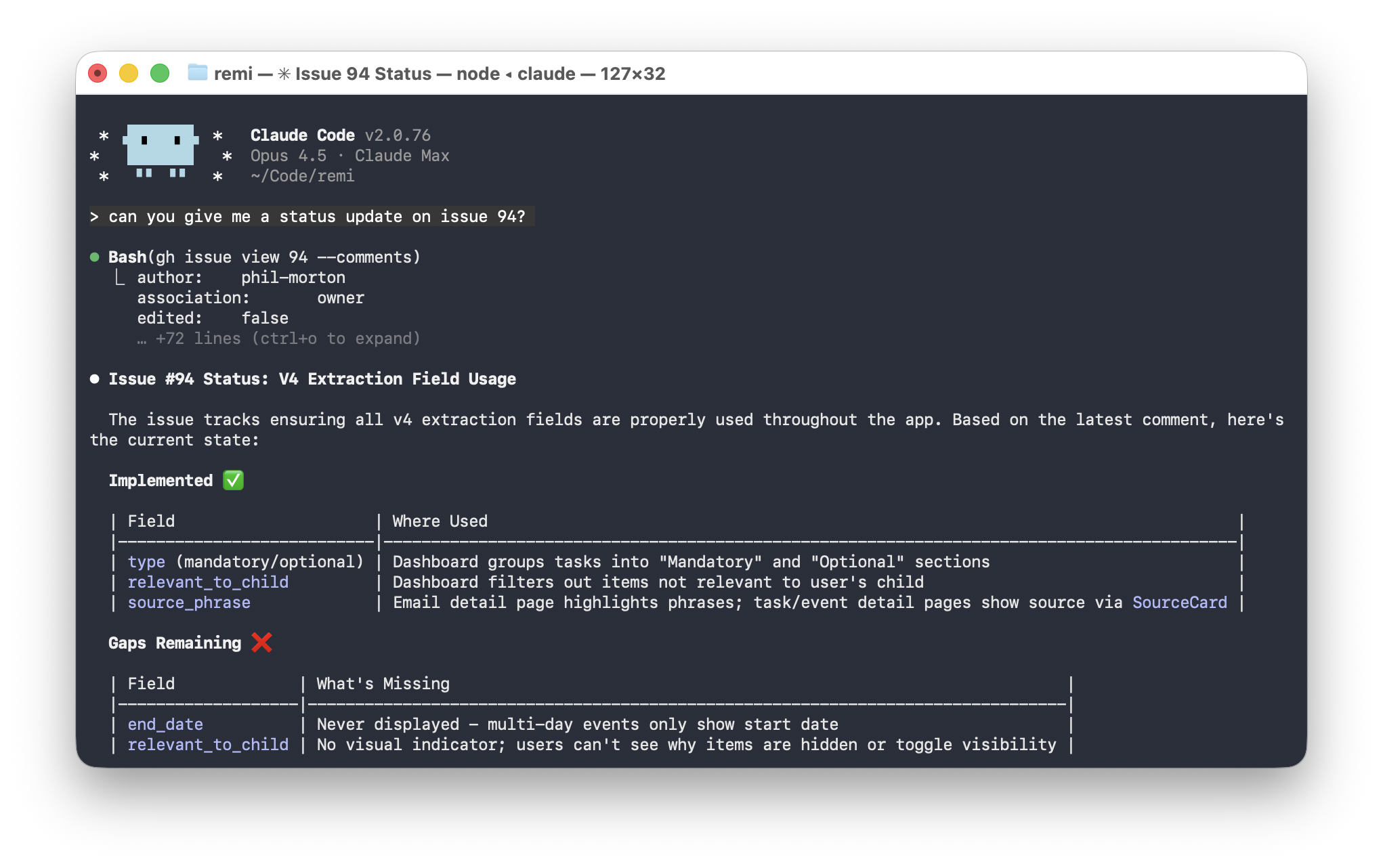
This is quite different to using something like ChatGPT on the web. There’s a structured approach built-in. When I tried Codex, it had a plan mode, but that was more limited; it just ensured the model didn’t write code. Claude does a lot more. It asks clarifying questions and really works through the problem with you.
If you look at purely the benchmark scores for Opus 4.5 vs other models, it doesn’t look like a big upgrade, but the harness the model sits in (i.e. Claude Code) makes a huge difference. Now you can essentially have a competent junior developer at your beck and call.
What I’ve been building
For the last four weeks, I’ve been spending an hour or two a day working on a web app for parents that sorts through all the emails they receive from schools, extracting tasks and events mentioned in newsletters and updates.
This is much more complicated than the dashboard I built with Codex but so far, Claude Code and Opus 4.5 really haven’t run into any problems.
There was one path I went down that I had to ask it to redo, but that was due to a decision we made together to use one architecture over another, which turned out to be unsuitable. The stemmed from me not explaining the context of the app, rather than it making a mistake.
Now you’re the head chef, not the line cook
Based on my experience so far, it’s now entirely possible to create software without writing any of the code yourself. But doing so requires skills that you need to learn. There’s a lot more to it than just “make me an e-commerce site for selling houseplants”.
I’ve been reading the book Vibe Coding (which despite being released in late October is already out of date) and one of the main points they make is that if you are no longer writing the code, your role is to be the technical lead.
AI abstracts away the details like many technologies before it, so the skills that professional software engineers (and the rest of us) need to have to be successful have changed. Now you’re managing a team of agents working in parallel, not just spending days writing one tiny piece of code.
What this means for product design and research teams
All of this is going to have a massive downstream impact on how UX people work.
I’ve been writing for a while about how AI coding will reshape product teams, shift the focus of UX research to product discovery and allow more people to be a solopreneur.
I’m here to tell you that this is all possible right now. It’s no longer a case of “when the AI gets good enough”. We have reached that point. It’s happening. This is not a drill!
The entire software development process is changing. The research and design process many people are familiar with will be upended as a result.
If you haven’t started to develop your AI skills, now is the time. Stay tuned for plenty of more in-depth content over the coming weeks.