Why every UX researcher’s new year resolution should be to create a viral video
This year, change how your organisation thinks about customers by putting them in their shoes.

As I’ve written about previously, research is only as valuable as the impact it creates:
The goal of a researcher isn’t to “do the research”.
The goal of a researcher is to generate empathy for customers in the minds of the people making decisions about the experience.
If what we learn in our research - however brilliant - is not understood by our audience and does not persuade them to act, it has no value.
How do researchers create this impact? By marketing the insights they discover so that colleagues understand what it’s like to be a customer.
Video is the best medium to do this with.
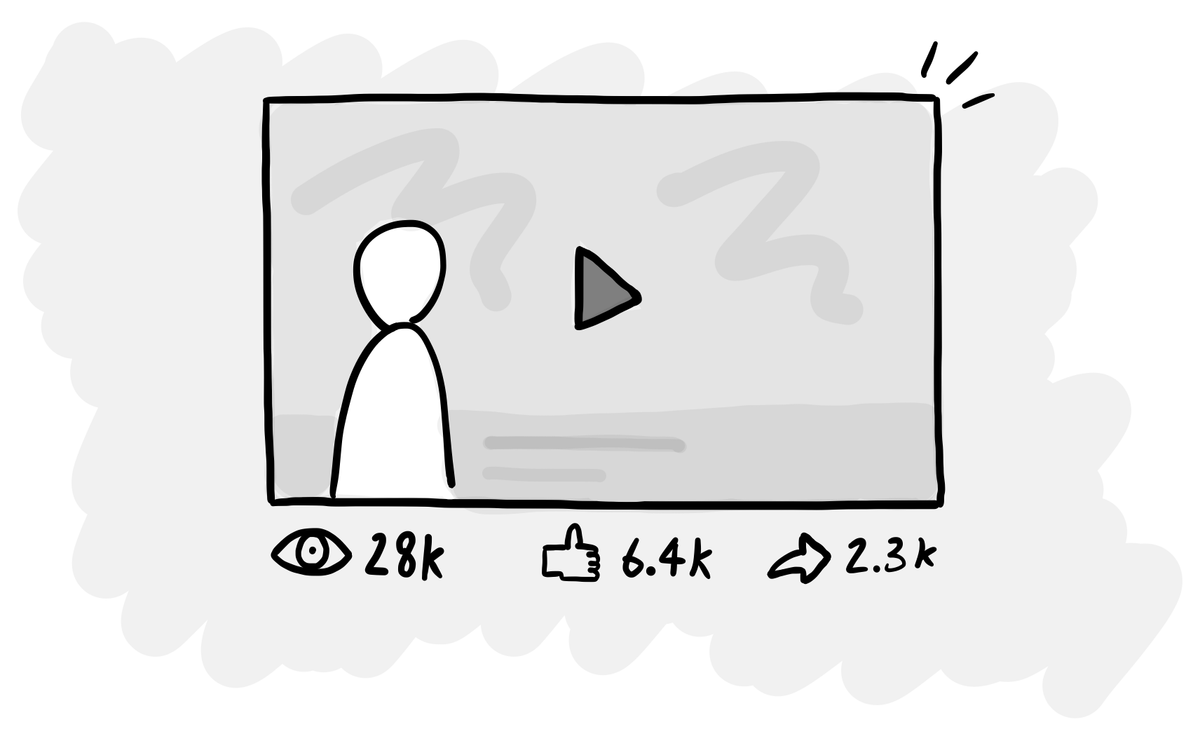
So if you’re looking for a new year’s resolution, here’s an idea: this year, create a video that goes viral inside your company.
Why video is the highest-impact research output
The problem with a lot of research is that people attend the debrief, listen politely, and then the report gets filed away in SharePoint. Everyone forgets what was learned and nothing gets done about it. It’s either not memorable, doesn’t compel them to action, or is just another data point in a very busy work life.
Video makes the customer reality visceral in a way that reports can’t. A well-crafted video is more engaging, more persuasive and easier to consume than any deck or Miro board.
Short videos can cut through the noise of work life like an effective ad. Done well, they can make people want to do something or changes how they think about customers. That’s what we’re trying to achieve with our research outputs.
Three types of research video content
Creating an effective video is easier said than done. First, let’s examine the different types of content we could include:
Type 1: Factual information
The most basic type of content we could have in a video are facts about what we did and what we learned.
Imagine recording a research report in presentation mode with a few transitions. We spoke to 18 customers in segment x and three themes emerged...
This type of content is easy to produce, but it’s unlikely to be memorable or go viral. If your video looks like a meeting recording, it probably won’t cut through.
Type 2: Research clips
Showing carefully selected moments from interviews can be powerful because it puts stakeholders face-to-face with the reality customers face.
One example: when the PS4 launched, we conducted research on the PlayStation Store and discovered that most people couldn’t even find it. We created a short video showing the statistics, the correct way to access the store, and two or three clips of people failing to complete that simple task.
That video went viral within PlayStation and led to a project that fixed the issue. After the fix, traffic to the store increased by 400%.
When there’s a glaring issue like this one, research clips can be incredibly powerful. But when it comes to giving your audience a broader sense of what it’s like to be a customer, it can be hard to find the right clips to tell whole story.
Maybe you didn’t ask the right question or perhaps the participant wasn’t articulate enough to do their experience justice. That’s where we might look to the next level...
Type 3: First- and third-person reconstruction
This type of video walks us through an experience and helps the us understand how people think, to give us a sense of what it’s like being ‘in their shoes’.
Let me show you an example from Johnny Harris. This isn’t a UX research output, but it’s the best example I know of for this type of video:
People who know me are probably sick of hearing this by now, but the way he walks the viewer through what it’s like to be an American living at different income levels is brilliant.
By talking to us as each of the three personas and showing us screen recordings of Craigslist, Google Maps and so on, you can see what it’s like to be that person from a first-person perspective.
His video exemplifies what a top-tier research output looks like because it generates empathy and understanding so effectively. He’s also done another recently for $100 million, $1 billion and $100 billion income levels, which I’d also recommend watching.
Another example of this type of video was created a few years ago by my colleagues at Foolproof for a major bank, showing what their application process was like.
The team applied for the accounts themselves and then created a video that showed time-lapse recordings of them navigating the various websites, plus the various pieces of paperwork they had to deal with. Using one of their houses as a set, they filmed a friend acting through the process, getting progressively frustrated at all the hassle involved in opening an account with the bank.
It’s a shame I can’t share it here, because it really brings home how bad the experience is. By showing it in a first- and third-person perspective, it’s extremely relatable to the audience.
This type of video takes a lot of time and effort to produce compared to stitching together a few research clips, but honestly I think they are worth it. Nothing cuts through like a video that puts you in the shoes of the customer and see things from their perspective.
Making it happen
Most UX researchers don’t have extensive experience of creating and editing videos, so you might feel that this is stretching your skills too far.
What I’d point out is that video editing tools have come a long way recently and that the barrier to doing this is storytelling, not technical.
You can use all the software that people use to create Reels or TikToks. You don’t need advanced editing skills to use Edits or CapCut, or even just iMovie. Production value matters less than the clarity of the insight you’re communicating.
Tell a story that people won’t forget
Imagine turning your insight into a video that is so memorable and persuasive that it becomes part of your organisation’s culture. Like a successful advert, it changes how people think about customers and it helps them see the world from their perspective. Decisions get made differently. Priorities shift because of it.
That is an incredibly tall order, but that level of impact is the peak of what a UX researcher can achieve. And video is the best way to do it.