Give in-person research a chance
You might be surprised at what you’re missing.

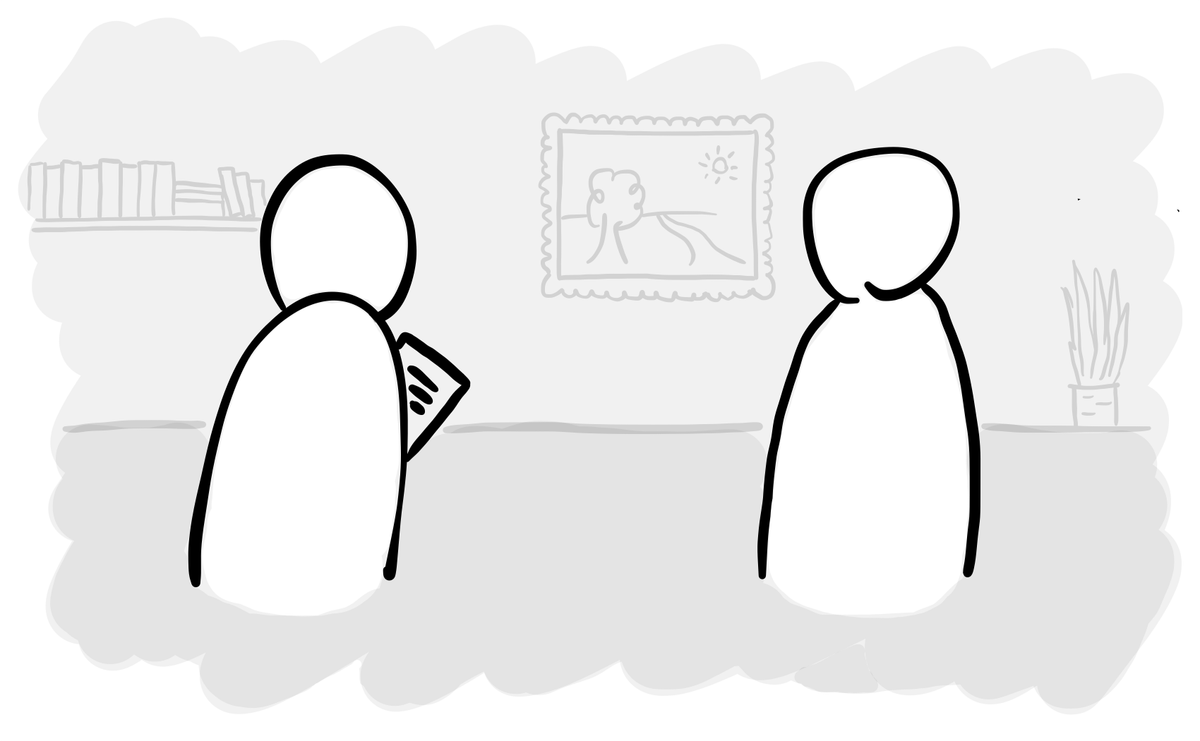
I’ve conducted about 2,000 hours of qualitative one-on-one research over the course of my career, and about 90% of it has been in-person. Ten years ago, multi-country projects meant getting on a plane and spending days in a lab was standard practice, while remote research was a rare exception, not the norm.
Then Covid happened and like everyone else, we moved to Zoom. The tools worked well enough that most teams never switched back. Remote research has become the default, not because anyone made a deliberate decision, but because it was easier. No lab booking, no travel, no logistics. Just press ‘join’.
But last week I got the chance to run a day of in-person usability testing for the first time in years. Six depth interviews, back to back, in our office lab.
I thought it would be exhausting, but I finished the day energised. It made me realise just how much we’re missing when we only do research through a screen.
What you’re missing if you’re just doing remote
Moderating research in person again felt like watching 4K TV after years of VHS. The fidelity of what you can see is just so much better.
In a remote usability test, you see the screen but you’re largely missing...
- Hands: You can’t tell if someone hovers their finger over an option without tapping it.
- Body language: You miss the moment they lean forward to squint at something, or glance away because they’ve lost confidence.
- Subtle verbal cues: People sighing and breathing in a different way that indicates they’re frustrated.
These behaviours tell you as much about the experience as anything that’s captured on a transcript.
Participants are less distracted too, since they can’t also be on their phone without you noticing. They’re much more present and the rapport is stronger when you’re sharing the same physical space.
Being off-camera can also be a relief. Depending on your lab setup (i.e. if you don’t have a huge two-way mirror in the room), you can moderate without being visible to observers. After years of being on camera all day, you might find moderating a little less tiring because of this.
In-person research sharpens your instincts
One of the unexpected benefits of the day was how much it refreshed my intuition as a researcher.
When you’ve spent hundreds of hours watching real people use websites and apps, you develop a feel for what will and won’t work. This expertise isn’t a replacement for research, but it makes researchers pretty good at guessing what real people will do when they encounter a design.
Remote research can dull this over time. You’re only seeing part of the picture, so your pattern recognition has less to work with. It felt like just one day of in-person testing refilled my intuition.
Practical tips for getting back in the room
If you haven’t done in-person research in a while, it can feel like an unnecessary complication or risk to run your sessions in a lab.
Here are a few tips for overcoming the inertia and get back moderating face-to-face:
- Tidy the room. Walk into the space you’re using and look at it through the participant’s eyes. Does it feel welcoming or like a storage cupboard? Get rid of tech that you’re not using. Borrow some plants and other decor from around the office. Get some tissues and hand sanitiser. It’s like having someone over to your house: a little effort goes a long way.
- Be a good host. Make the effort to welcome people into the room and make them feel comfortable. Take time for small talk. Let people take their coat off. Tell them it’s fine to ask for a drink, want the aircon to be adjusted or take a toilet break.
- Run a pilot session. When you’re doing remote research, there’s usually not much tech to test. In a lab, there’s more that can go wrong. Running a pilot interview with a colleague helps you get familiar with the setup, not just test your discussion guide.
- Don’t take notes on a laptop. The screen creates a physical barrier between you and the participant. They can also hear you typing, which signals what you find interesting and what you don’t. Instead use pen and paper, or an iPad with a stylus. Last week I exported my discussion guide to PDF and annotated it in Goodnotes on my iPad, which worked fine.
- Accept the nerves. It’s natural to feel a bit rusty. But remember, the participant feels even more nervous than you do. They’re walking into an unfamiliar space, wondering if they’ll say the right things.
Make in-person research part of your toolkit
When people talk about ‘mixed methods’, they usually mean qualitative and quantitative, but maybe we should also include where the research takes place.
It doesn’t always make sense to do research in-person, but blending remote and face-to-face research within a single project can give you the best of both.
It’s also easy to assume that research with niche or B2B recruits can’t possibly be done in-person. But with many companies asking people back to the office a few days a week, there’s a decent chance you can get people into a lab in a big city like London on the right day.
And don’t forget that the absolute best place to do research is going to where your participants actually use the product. Visiting someone's office or home takes more time, money and preparation, but you can’t beat the insight you get from doing it.
Running research face-to-face isn’t as easy as sitting at home, but if you’ve spent the last five years defaulting to remote research, give it another chance. You might be surprised at what you’ve been missing.