The soft skill that matters most when AI makes teams smaller
With greater individual responsibility, being able to own an outcome end-to-end will be critical.

With AI upending long-established ways of working, a lot of people in our industry are wondering what the future holds for their career. Are we cooked?
How do you get up to speed or ahead of the curve? Go on LinkedIn and it’s tools and workflows that everyone’s talking about. Have you seen what Google Stitch can do? Which Figma MCP are you using? How are you using Claude Code to analyse research transcripts? This is what I wrote all about last week.
You do need to start experimenting with AI and integrate it into your work, but hard skills alone aren’t going to get you hired in 3-5 years’ time. The soft skills that are valuable are also changing and the most important one is ownership.
In smaller teams, soft skills matter more
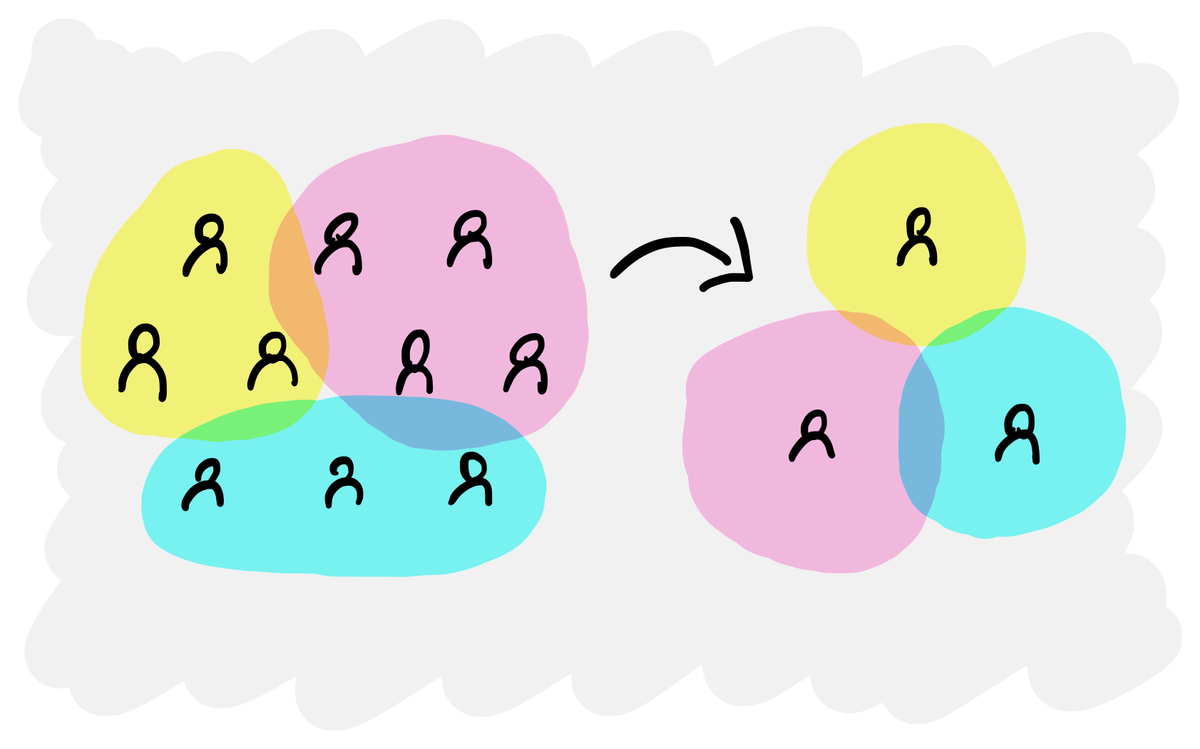
If there is one clear trend, it’s that AI is making teams smaller. Agents allow people to do more of the same work (e.g. writing more code) and more types of work (e.g. designing a screen and coding the production front-end). This means you can achieve the same output with fewer people.
Imagine you’re creating an app. Two years ago, you might have a squad of ten people: five engineers, two designers, a PM, a researcher and a data scientist. Now you can achieve the same outcome with 3-4 people who are skilled at using AI.
One implication is that if you are assembling a team of 3-4 people, the soft skills of each person matter more. In a team of ten, you can tolerate someone who is not contributing in the right way, but with three it’s a disaster.
Soft skills used to be something that people only deliberately started developing when they wanted to move into a leadership role. With smaller teams where each person has much more responsibility, this has to change.
Ownership is the defining skill
There are lots of soft skills that are important at work, but the one that’s really going to matter in these small AI-powered product teams is ownership.
If you have a small team in which each person has a broad remit, you need people to take responsibility for broader outcomes, not tasks. Your job is not to test each sprint’s prototype with users or to design the onboarding flow, it’ll be to research, design and built the entire front-end of the app.
By ‘ownership’, I mean the ability to achieve outcomes end-to-end without being told exactly what to do:
- Being comfortable with ambiguity, uncertainty and incomplete information.
- Negotiating with others to get what you need and work through problems.
- Maintaining momentum when things are unclear.
- Being proactive in changing things for the better.
- Creating clarity when there is none.
Ownership means you act like less like a contributor with a narrow scope of work and more like a general manager who feels accountable for the whole product they’re bringing to market.
The best designers and researchers already operate this way – they go beyond their traditional roles, take ownership of the problem and work autonomously towards the overall objective. With AI and smaller teams, though, the gap between those who have this skill and those who don’t is about to get much wider.
How to build the ownership muscle
This is already a skill that’s being emphasised across the industry. For example, Intercom’s designers are moving towards owning the entire front-end design and build. Before this skill becomes a baseline expectation, there’s time to develop it in a couple of ways:
- In your work: find something in your team that nobody owns and drive it end-to-end. Has anyone explored AI moderation tools for research? Has anyone thought about how to embed accessibility into the AI coding process? Every team has a million initiatives that no-one is owning. Pick one up without waiting to be asked and own it.
- Side projects: build your own app or website. When you have your own product, you handle everything: research, design, engineering, legal and compliance, pricing and so on. This isn’t just a learning exercise – it’s one of the best ways to demonstrate ownership to a future employer, because you’re literally the owner.
Imagine a designer or researcher who, alongside their day job, has shipped a small product that real people use. That person has already proven they can operate across domains, make decisions and be accountable for outcomes. That’s the profile companies are going to be looking for.
The concept of general management may feel alien to many of us – it seems like the opposite end of the spectrum from deep craft. But ownership doesn’t mean abandoning depth. It means expanding your scope from producing outputs to being accountable for what those outputs achieve.